
How IoT Is Quietly Transforming Manufacturing and Supply Chains

Introduction

In today’s rapidly changing industrial landscape, the Internet of Things (IoT) has transcended the initial hype and is now a significant force transforming manufacturing and supply chain operations worldwide. While many businesses continue to focus on traditional automation, IoT is driving deeper transformation by providing real-time data visibility, improving operational efficiency, and enabling predictive decision-making. For manufacturers and logistics leaders, adopting IoT is no longer optional; it is essential for competing in a connected global economy. OneData Software Solutions, a leader among IoT app development companies, helps businesses harness the full potential of IoT to optimize processes, improve visibility, and deliver measurable value across the enterprise.

What Makes IoT a Game Changer for Industry

The concept of IoT refers to a network of devices, sensors, machines, and systems that are connected to the internet and capable of collecting, sharing, and analyzing data. In manufacturing and supply chains, these devices create a digital nervous system that turns previously hidden physical processes into actionable insights.

Manufacturers and logistics operators can now monitor equipment health, track inventory movement, measure environmental conditions, and manage resources with unprecedented granularity. The result is better decision-making, faster response times, and reduced costs.

Real-Time Visibility Drives Smarter Operations

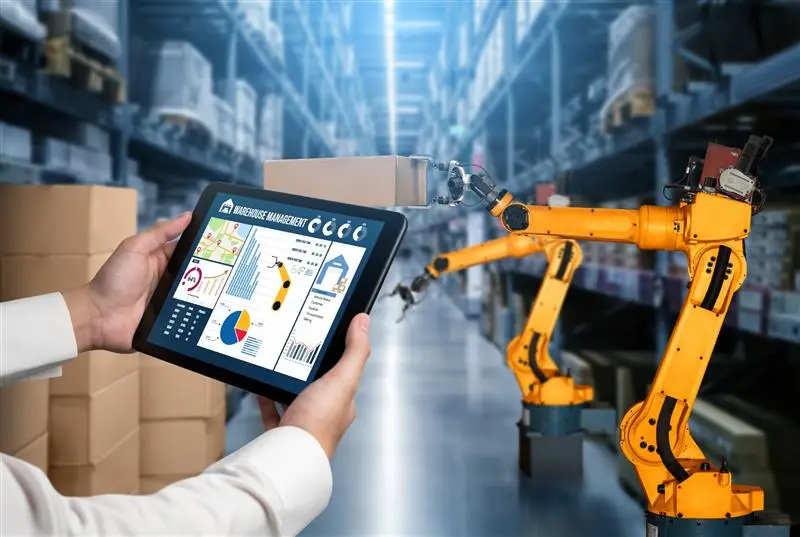
One of the most tangible benefits of IoT in manufacturing and supply chains is real-time visibility. Traditionally, production managers and supply chain planners

had to work with periodic reports, manual updates, or siloed systems. This often led to delays, miscommunication, and reactive decision-making. With IoT, data flows continuously from connected assets such as machines on the factory floor, transport vehicles, and warehouse equipment. This rich stream of data enables stakeholders to monitor performance in real time and respond proactively.

For example, an industrial machine equipped with IoT sensors can alert plant managers when it begins to operate outside normal parameters. Instead of waiting for a scheduled maintenance window or a machine breakdown, manufacturers can take corrective action immediately, reducing downtime and preventing costly failures.

Predictive Maintenance Reduces Unplanned Downtime

Predictive maintenance has emerged as one of the most impactful applications of IoT in manufacturing. Traditional maintenance models are often scheduled or reactive, leading to unnecessary service costs or unexpected equipment failure. IoT changes that by enabling condition-based and predictive strategies.

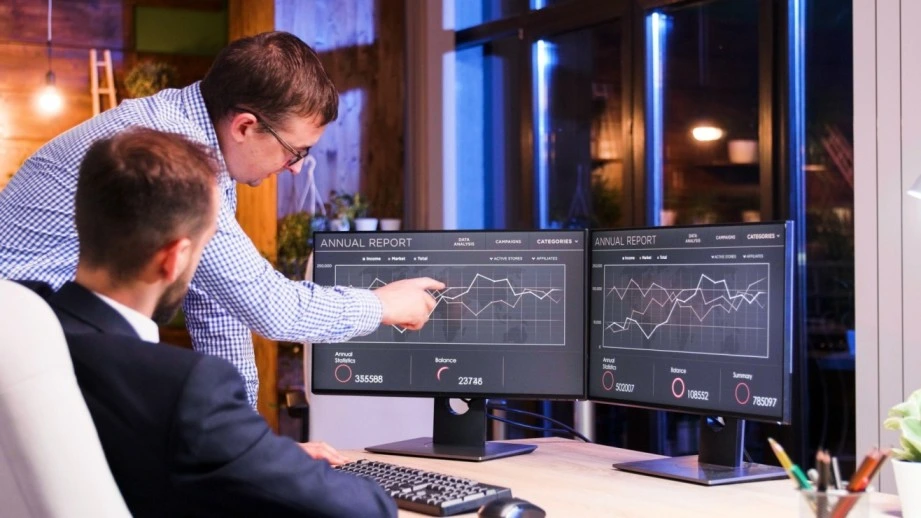
Connected sensors collect vibration, temperature, pressure, and performance metrics from machines. With advanced analytics engines and AI capabilities built into IoT platforms, businesses can anticipate when a component is likely to fail and schedule service before a breakdown occurs. OneData integrates IoT solutions with predictive analytics and cloud data platforms, allowing manufacturers to build dashboards that display machine health, forecast maintenance needs, and optimize spare parts inventory.

Enhanced Supply Chain Tracking and Inventory Management

Modern supply chains span continents, involve multiple partners, and handle billions of dollars in goods. IoT provides the visibility and traceability that make complex supply chains more efficient and resilient.

By attaching IoT sensors to products, pallets, and containers, businesses can monitor location, temperature, humidity, shock, and tampering throughout transit. This level of tracking allows supply chain managers to ensure product integrity, reduce losses, and improve customer satisfaction.

For perishable goods such as food, pharmaceuticals, or chemicals, IoT ensures compliance with storage conditions. Alerts and automated controls help prevent spoilage and reduce waste, translating directly into cost savings and better-quality control.

Improving Quality Control and Factory Efficiency

Quality control has always been a cornerstone of manufacturing excellence. IoT extends quality assurance by embedding sensors throughout the production line. These sensors capture high-resolution data at every stage of production, enabling detailed analysis of trends, process deviations, or defects in real time.

Manufacturers can correlate IoT data with production outcomes and quickly adjust parameters, machinery settings, or workflows to maintain high quality. Over time, the continuous feedback loop drives process improvements and reduces rework. In this context, OneData’s expertise in data analytics solutions and cloud data analytics becomes crucial. By combining IoT with robust analytic models, businesses can translate raw sensor data into meaningful insights that drive continuous improvement.

Empowering Workforce Productivity

Contrary to the belief that technology might replace people, IoT empowers human workers by eliminating repetitive tasks and giving them more accurate information to act on. Shop floor operators, quality engineers, and supply chain planners can spend less time on manual data collection and more time on decision-making, innovation, and strategic tasks.

Workers equipped with mobile IoT applications can instantly see alerts, process statuses, or maintenance requests, enabling faster response times and higher productivity. This fusion of human expertise with digital augmentation is where the true value of IoT lies.

Reducing Costs and Improving Sustainability

IoT’s impact on manufacturing and supply chains is also visible in cost savings and environmental sustainability. Through better energy monitoring, waste tracking, and resource utilization analytics, businesses reduce operational costs and improve their sustainability metrics.

IoT sensors can detect energy leaks, excessive consumption patterns, or equipment inefficiencies, enabling corrective actions that reduce utility bills and carbon footprints. In supply chains, optimized routing and real-time tracking aid in reducing fuel consumption and logistical overhead. OneData helps organizations adopt end-to-end IoT integration by combining real-time data capture with advanced analytics, enabling smarter decision-making that aligns with business goals.

Overcoming Challenges and Ensuring Success

Despite the evident advantages, IoT adoption in manufacturing and supply chains does come with challenges. Security concerns, data integration complexities, and scalability issues often slow down implementations. However, with a well-thought-out strategy and the right technology partner, these challenges become opportunities.

Security must be built into the IoT architecture from the ground up, ensuring that connected devices, networks, and data streams are protected against cyber threats. IoT platforms must support secure authentication, encryption, and monitoring to maintain trust and compliance.

Scalability is another critical consideration. As the volume of connected devices and data grows, strong IoT infrastructure and cloud platforms ensure that performance remains robust and cost-effective.

Integration with existing enterprise systems — such as ERP, CRM, and business intelligence tools — is essential for deriving the most value from IoT data. This is where companies such as OneData, with capabilities in IoT app development, cloud consulting, data analytics, AI, and end-to-end digital solutions, deliver strategic advantage.

The Future of IoT in Manufacturing and Supply Chains

As IoT technology continues to evolve, its influence will only grow stronger. Emerging innovations such as edge computing, digital twins, 5G connectivity, and AI-powered analytics are improving the capabilities of IoT systems:

  • Edge computing reduces latency by processing data closer to where it is generated
  • Digital twin models simulate physical assets for testing and optimization
  • 5G networks support faster data exchange and scalability
  • AI analytics extract deeper insights from massive sensor datasets

Manufacturers and supply chain leaders who embrace these technologies early will be positioned as industry leaders, with higher resilience, efficiency, and adaptability.

Conclusion

IoT is quietly transforming manufacturing and supply chain operations in profound ways. From real-time visibility and predictive maintenance to supply chain tracking, quality control, and workforce empowerment, the impact of IoT extends across every aspect of industrial operation.

Rather than replacing people, IoT enhances human capabilities and enables teams to focus on strategic value creation. Integrated with advanced data analytics, cloud platforms, and AI insights — as enabled by OneData’s IoT app development and analytics expertise, the innovation potential is vast.

For businesses ready to innovate and compete in an increasingly connected world, IoT is not the future — it is the present.

FAQs
1. How is IoT used in manufacturing?

IoT in manufacturing connects machines, sensors, and systems to collect real-time data. This enables predictive maintenance, improved quality control, better asset tracking, and enhanced operational efficiency.

IoT improves supply chain visibility by enabling real-time tracking of goods, monitoring environmental conditions, reducing losses, optimizing routes, and improving inventory management

Yes. IoT enables predictive maintenance by monitoring equipment performance. Businesses can identify potential issues early and schedule maintenance before breakdowns occur, significantly reducing unplanned downtime.

With proper architecture, encryption, device authentication, and secure cloud infrastructure, IoT systems can be highly secure. Working with experienced IoT development partners ensures safe implementation.

OneData provides end-to-end IoT app development, data analytics solutions, cloud integration, and scalable infrastructure to help manufacturers and supply chain businesses unlock real-time insights and operational efficiency

Table of content
Mobile App Development Company

Leave a Reply

Your email address will not be published. Required fields are marked *

Read Our Other Articles

Scroll to Top

CONTACT OUR
BUSINESS DEVELOPMENT EXPERT

Contact Form