
Smart Agriculture: How IoT Sensors Are Revolutionizing Farming in India

Introduction

Agriculture has always been the backbone of India’s economy. Millions of farmers depend on agriculture for their livelihood, and the sector contributes significantly to the country’s growth. However, modern farming faces several challenges, including unpredictable weather patterns, water scarcity, rising input costs, labor shortages, and the need to increase crop productivity to feed a growing population.

To address these challenges, technology is playing an increasingly important role in agriculture. Among the most impactful innovations is the Internet of Things (IoT). IoT-powered sensors are helping farmers make smarter decisions, optimize resources, and improve crop yields through real-time data collection and analysis.

Today, smart agriculture is transforming traditional farming practices into data-driven operations. With expertise in IoT development services, data analytics solutions, cloud consulting, and digital transformation, OneData Software Solutions helps organizations leverage advanced technologies to improve efficiency and sustainability across industries, including agriculture.

What Is Smart Agriculture?

Smart agriculture refers to the use of advanced technologies such as IoT, Artificial Intelligence (AI), cloud computing, and data analytics to improve farming operations.

Instead of relying solely on manual observation and traditional methods, farmers can use connected devices and sensors to collect real-time information about their fields, crops, livestock, and environmental conditions.

This data enables informed decision-making that improves productivity while reducing waste and operational costs.

Understanding IoT Sensors in Agriculture

IoT sensors are connected devices that collect and transmit data from the field to cloud-based systems for monitoring and analysis.

These sensors can measure:

  • Soil moisture levels
  • Soil temperature
  • Humidity
  • Rainfall
  • Air temperature
  • Water quality
  • Crop health
  • Livestock movement
  • Equipment performance

The collected information is transmitted through wireless networks to cloud platforms, where advanced data analytics solutions process the data and provide actionable insights.

Why Smart Agriculture Matters in India

India faces unique agricultural challenges that make smart farming particularly valuable.

Water Scarcity

Many regions experience water shortages and irregular rainfall patterns.

IoT-based irrigation monitoring helps farmers use water more efficiently by applying it only when crops need it.

Climate Variability

Unpredictable weather conditions affect crop productivity.

Real-time weather monitoring enables proactive decision-making and risk reduction.

Labor Challenges

Rural labor shortages are increasing operational difficulties for farmers.

Automation and remote monitoring reduce dependency on manual processes.

Growing Food Demand

India’s growing population requires higher agricultural productivity.

Smart farming technologies help maximize yields while minimizing resource consumption.

How IoT Sensors Are Transforming Farming

Precision Irrigation

One of the most common uses of IoT in agriculture is precision irrigation.

Soil moisture sensors continuously monitor water levels and automatically trigger irrigation systems when necessary.

Benefits include:

  • Reduced water waste
  • Lower operational costs
  • Improved crop health
  • Higher yields

This approach supports sustainable farming while addressing water conservation challenges.

Soil Health Monitoring

Healthy soil is essential for successful farming.

IoT sensors provide continuous insights into:

  • Nutrient levels
  • Soil pH
  • Moisture content
  • Temperature

By understanding soil conditions in real time, farmers can optimize fertilizer application and improve crop performance.

Crop Monitoring and Disease Detection

Advanced sensors and connected devices help identify potential crop issues before they become serious problems.

Farmers can monitor:

  • Crop growth patterns
  • Pest infestations
  • Disease outbreaks
  • Nutrient deficiencies

When integrated with AI data analytics, these systems can generate alerts and recommend corrective actions.

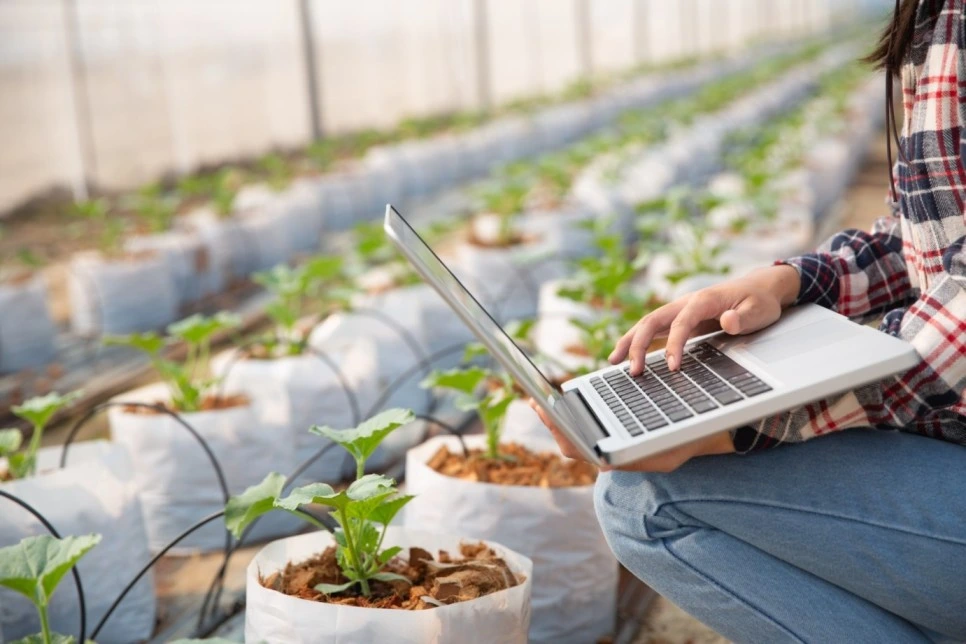
Smart Greenhouse Management

Greenhouses require precise environmental control.

IoT sensors monitor:

  • Temperature
  • Humidity
  • Light intensity
  • Carbon dioxide levels

Automated systems can adjust environmental conditions to maximize crop growth and quality.

Livestock Monitoring

IoT is not limited to crops.

Smart agriculture solutions also support livestock management through connected sensors that track:

  • Animal health
  • Feeding behavior
  • Movement patterns
  • Location

Farmers can quickly identify health issues and improve overall herd management.

The Role of Data Analytics in Smart Agriculture

Collecting data is only the first step.

The real value comes from analyzing that data and transforming it into actionable insights.

This is where data analytics solutions become essential.

Modern cloud data analytics platforms enable farmers and agribusinesses to:

  • Monitor operations in real time
  • Forecast crop yields
  • Predict weather impacts
  • Optimize resource allocation
  • Improve decision-making

With big data analytics, large volumes of agricultural data can be processed efficiently to uncover patterns and opportunities.

AI and Predictive Agriculture

Artificial Intelligence is making agriculture even smarter.

By combining IoT sensor data with AI data analytics, businesses can:

Predict Crop Diseases

AI models analyze environmental conditions and identify disease risks before visible symptoms appear.

Optimize Planting Schedules

Predictive analytics helps farmers determine the best planting and harvesting times.

Improve Yield Forecasting

AI-driven insights enable more accurate production planning and inventory management.

Reduce Resource Waste

Intelligent recommendations improve fertilizer, pesticide, and water usage.

These capabilities help create more profitable and sustainable farming operations.

Cloud Technology: The Foundation of Smart Farming

Cloud platforms play a critical role in modern agriculture.

IoT devices generate enormous amounts of data that must be stored, processed, and analyzed efficiently.

Through cloud consulting services and cloud data analytics, agricultural businesses can:

  • Store agricultural data securely
  • Access information remotely
  • Scale operations efficiently
  • Enable real-time monitoring
  • Support AI and analytics applications

Cloud-based solutions make advanced farming technologies accessible to organizations of all sizes.

Benefits of IoT-Enabled Smart Agriculture

Increased Crop Productivity

Data-driven decisions help maximize yield and improve crop quality.

Better Resource Management

Farmers can optimize water, fertilizer, and pesticide usage.

Reduced Operational Costs

Automation minimizes manual effort and improves efficiency.

Enhanced Sustainability

Smart agriculture promotes responsible use of natural resources.

Faster Decision-Making

Real-time monitoring enables immediate responses to changing conditions.

Improved Risk Management

Predictive insights help reduce the impact of weather and disease-related risks.

Challenges in Smart Agriculture Adoption

While the benefits are significant, some challenges remain.

Initial Investment Costs

Technology adoption requires upfront investment in devices and infrastructure.

Connectivity Issues

Rural areas may face network connectivity limitations.

Data Management Complexity

Large volumes of agricultural data require robust analytics capabilities.

Technical Knowledge Gaps

Farmers may need training to fully utilize smart agriculture technologies.

These challenges can be addressed through partnerships with experienced technology providers.

How OneData Supports Smart Agriculture Initiatives

OneData Software Solutions helps organizations adopt innovative technologies that improve operational performance and business outcomes.

IoT Development Services

Custom IoT solutions enable real-time monitoring and automation.

Data Analytics Solutions

Advanced analytics platforms transform agricultural data into actionable insights.

Cloud Consulting Services

Scalable cloud environments support data storage, processing, and security.

AI-Powered Intelligence

AI-driven analytics improve forecasting, resource optimization, and decision-making.

Digital Transformation Expertise

OneData helps organizations modernize operations through integrated technology solutions.

The Future of Agriculture in India

The future of farming is increasingly connected, intelligent, and data-driven.

As IoT devices become more affordable and accessible, adoption across India’s agricultural sector is expected to grow rapidly.

Emerging technologies such as:

  • Artificial Intelligence
  • Machine Learning
  • Drone Monitoring
  • Remote Sensing
  • Cloud Computing
  • Predictive Analytics

will continue to reshape how food is produced and managed.

Farmers who embrace these innovations will be better positioned to increase productivity, reduce costs, and build sustainable agricultural businesses.

Final Thoughts

Smart agriculture is transforming farming across India. IoT sensors are helping farmers move beyond traditional methods by providing real-time visibility into crops, soil, livestock, and environmental conditions.

When combined with data analytics solutions, cloud data analytics, and AI-powered insights, IoT technology creates a powerful ecosystem for smarter farming and better decision-making.

With expertise in IoT development, cloud consulting, and data analytics services, OneData Software Solutions supports organizations looking to harness technology for innovation, efficiency, and long-term growth.

The future of Indian agriculture is connected—and IoT is leading the way.

FAQs
1. What is smart agriculture?

Smart agriculture is the use of technologies such as IoT, AI, cloud computing, and data analytics to improve farming efficiency, productivity, and sustainability through data-driven decision-making.

IoT sensors collect real-time data on soil conditions, weather, crop health, irrigation, and livestock, enabling farmers to make informed decisions and optimize resource usage.

IoT improves crop yields, reduces water consumption, lowers operational costs, enhances sustainability, enables predictive maintenance, and supports better farm management.

AI analyzes data collected by IoT sensors to predict crop diseases, optimize irrigation schedules, forecast yields, and provide recommendations for improving agricultural productivity.

OneData provides IoT development services, cloud consulting, AI-powered analytics, and data analytics solutions that help agricultural organizations build scalable, data-driven farming operations.

Table of content
Mobile App Development Company

Leave a Reply

Your email address will not be published. Required fields are marked *

Read Our Other Articles

Scroll to Top

CONTACT OUR
BUSINESS DEVELOPMENT EXPERT

Contact Form