

Pharmaceutical Manufacturing Facility Improves Personnel Safety and Emergency Response with OneData
Learn how a pharmaceutical manufacturing facility partnered with OneData to design a real-time personnel safety and emergency alert platform using IoT-based indoor tracking, silent alarm broadcasting, and live operational monitoring.

Benefits
Real-time personnel visibility across manufacturing zones
Silent SOS alerting without disrupting facility operations
Automated fall detection for faster emergency response
Improved monitoring of restricted and high-risk areas
Scalable architecture designed for phased deployment across a 25-acre facility
About the Customer
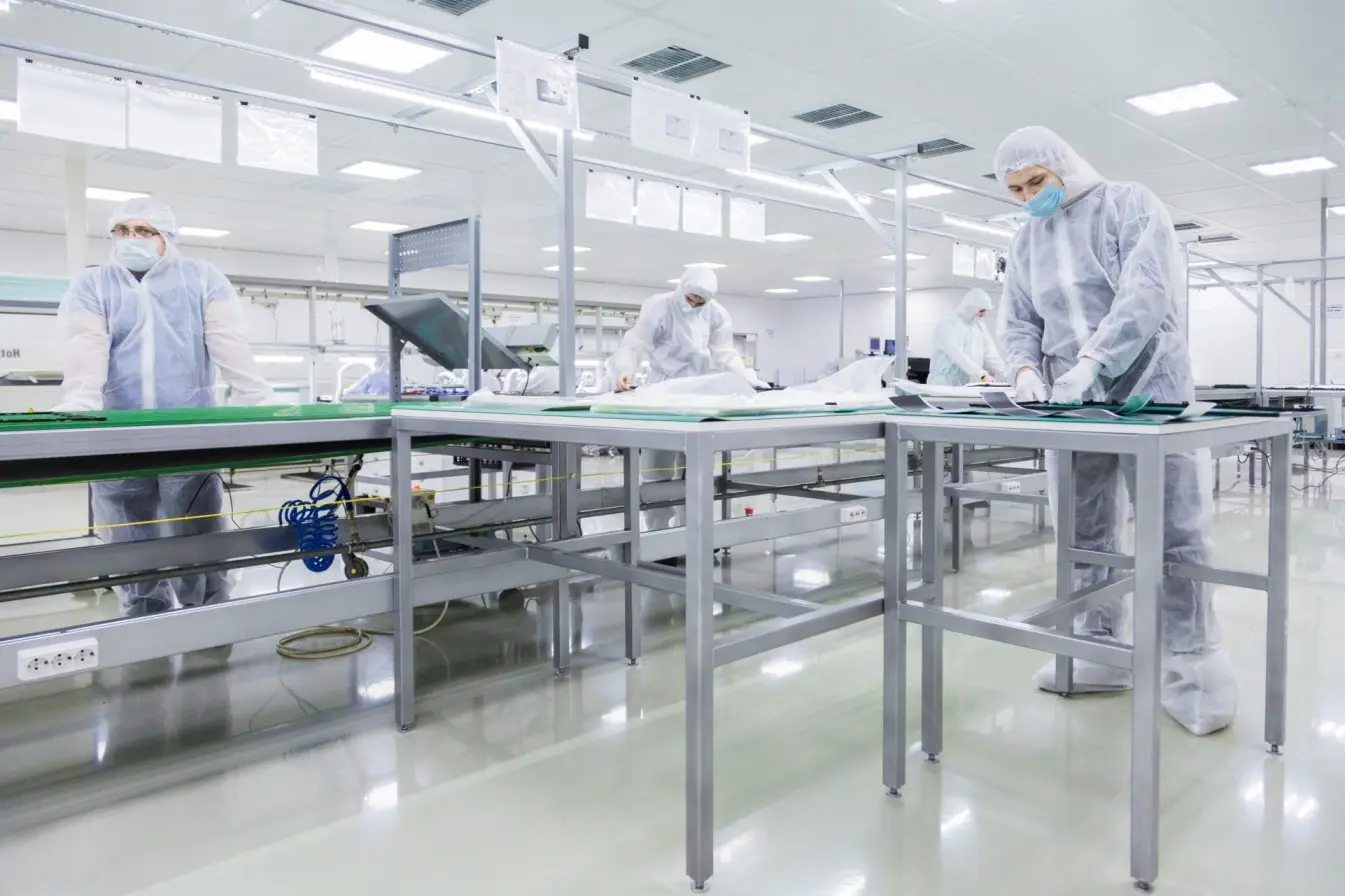
The customer is a pharmaceutical manufacturing organization operating a large GMP-compliant production facility. The organization required improved personnel safety monitoring, emergency response visibility, and real-time operational awareness across a complex industrial environment with multiple production zones and restricted areas.
Overview
As part of its ongoing safety modernization efforts, a pharmaceutical manufacturing facility operating across a 25-acre GMP-compliant site identified the need for improved personnel visibility and emergency response coordination.
The organization required a reliable and scalable system capable of supporting real-time personnel tracking, silent emergency alerting, and operational monitoring across multiple production and restricted-access zones without disrupting day-to-day manufacturing operations.
To address these requirements, the facility partnered with OneData to design a phased IoT-based personnel safety platform using BLE wearable devices, AoA-based indoor positioning technology, and centralized live monitoring dashboards for emergency visibility and operational coordination.
Overview
As part of its ongoing safety modernization efforts, a pharmaceutical manufacturing facility operating across a 25-acre GMP-compliant site identified the need for improved personnel visibility and emergency response coordination.
The organization required a reliable and scalable system capable of supporting real-time personnel tracking, silent emergency alerting, and operational monitoring across multiple production and restricted-access zones without disrupting day-to-day manufacturing operations.
To address these requirements, the facility partnered with OneData to design a phased IoT-based personnel safety platform using BLE wearable devices, AoA-based indoor positioning technology, and centralized live monitoring dashboards for emergency visibility and operational coordination.
Opportunity | Improving Personnel Safety and Emergency Response Visibility
The pharmaceutical manufacturing facility required improved visibility into personnel movement, emergency situations, and worker safety across a large GMP-compliant industrial site.
The organization faced challenges in identifying the real-time location of personnel during emergency situations, limiting the ability to coordinate rapid response activities across multiple operational zones. Existing alarm mechanisms were not designed to support discreet emergency communication, increasing the risk of operational disruption and panic during critical incidents.
Worker safety monitoring also required improvement, particularly in situations involving falls, medical emergencies, or restricted-area access where personnel may not be able to manually request assistance.
At the same time, the facility required a reliable indoor positioning architecture capable of maintaining location accuracy across metal-heavy manufacturing environments with significant RF interference caused by industrial machinery, walls, Wi-Fi networks, and structural constraints.
These challenges highlighted the need for a scalable and operationally reliable safety platform capable of supporting real-time personnel tracking, silent emergency alerting, fall detection, geofencing, and centralized monitoring visibility while minimizing operational disruption.
Solution | Implementing an IoT-Based Personnel Safety and Tracking Platform
To address these challenges, the organization partnered with OneData to design a phased IoT-based personnel safety and emergency response platform focused on improving real-time visibility, operational awareness, and worker safety monitoring.
The implementation approach was designed around a controlled Proof of Concept (PoC) deployment covering a 1-acre production area before scaling to the full 25-acre manufacturing facility. The phased deployment model allowed the organization to validate positioning accuracy, alert latency, dashboard performance, fall detection responsiveness, and RF behavior within a live manufacturing environment prior to full-scale rollout.
The solution architecture was built using Bluetooth 5.1 Angle of Arrival (AoA) locator devices deployed across the facility to triangulate the position of wearable BLE personnel tags and provide real-time indoor location tracking capabilities.
Personnel wearable devices were designed in the form of badges, wristbands, or lanyards capable of supporting real-time location broadcasting, silent SOS alert triggering, and fall detection using integrated 3-axis accelerometers. The solution also supported future RFID integration capabilities based on operational feasibility requirements.
To improve monitoring visibility and operational coordination, OneData designed a centralized EdgeOne / ThingsBoard dashboard platform capable of displaying live personnel locations, floor-plan overlays, geofencing zones, incident alerts, event history, and operational reporting within a centralized control-room environment.
Operational monitoring workflows were designed to support real-time emergency visibility, incident escalation, and personnel tracking activities across the facility while improving response coordination during safety-related events.
The deployment architecture utilized a hexagonal honeycomb locator placement model designed to reduce dead zones, improve triangulation consistency, and maintain more uniform RF coverage across the manufacturing environment. The overlapping locator coverage design also improved positioning reliability within metal-heavy industrial zones where wireless interference and structural constraints could impact signal propagation.
The Proof of Concept deployment included measurable operational validation criteria, including location accuracy within three metres for at least 90 percent of tracked personnel, fall-detection alerting within five seconds of simulated incidents, dashboard latency below two seconds, and system uptime targets of at least 98 percent during the evaluation period.
Outcome | Enabling Scalable Personnel Safety and Operational Visibility
The proposed solution established a scalable framework for improving personnel safety, operational visibility, and emergency response coordination across the manufacturing facility.
Improved visibility into personnel movement across operational zones
Faster emergency response through real-time personnel location tracking
Silent emergency alerting capabilities without disrupting facility operations
Automated fall detection for improved worker safety monitoring
Enhanced restricted-zone monitoring through geofencing capabilities
Improved control-room visibility through centralized live dashboard monitoring
Reduced RF coverage gaps through honeycomb-based locator deployment design
Improved incident traceability through centralized event logging and reporting
Reduced implementation risk through phased Proof of Concept validation before full-scale deployment
By validating the architecture within a live production environment before large-scale rollout, the organization gained operational insight into system accuracy, latency, RF behavior, and monitoring performance while establishing a scalable foundation for future personnel safety operations across the full manufacturing site.
Build a more secure and cost-efficient
AWS environment
Partner with OneData to optimize your cloud infrastructure, reduce costs, and
strengthen security—without compromising performance.